
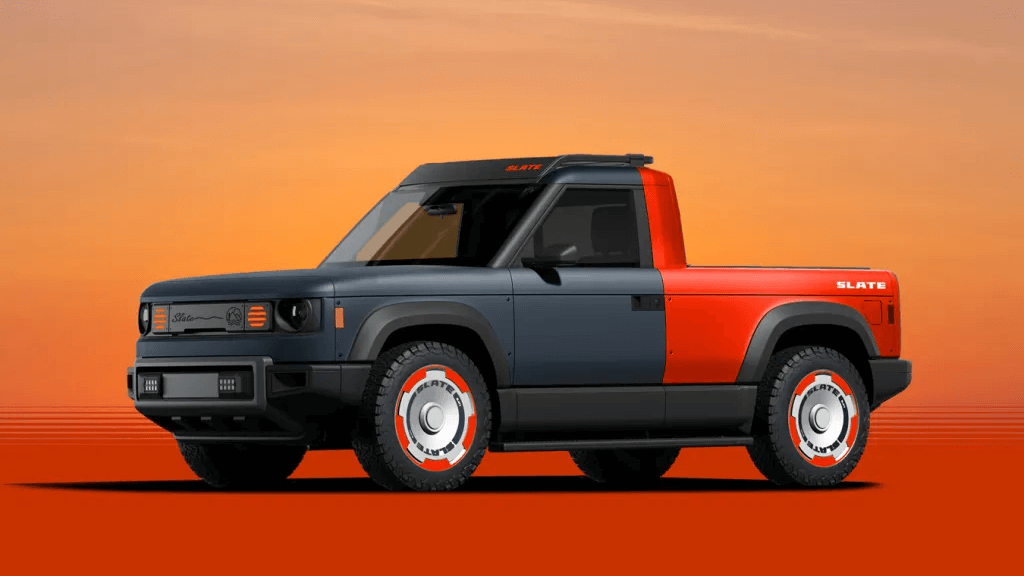
In a landscape where electric vehicles (EVs) are often viewed as premium purchases, Slate Auto is taking a refreshingly bold step: launching an EV truck aimed at accessibility, simplicity, and personalization.
Backed by Jeff Bezos and headquartered in Michigan, Slate Auto has introduced the “Blank Slate” — a minimalist, two-seater electric pickup truck starting at an impressive sub-$20,000 price point (after federal EV tax credits). In a market where most EVs can easily cross the $50,000 mark, Slate’s vision feels timely and disruptive.
Back to Basics — and Proud of It
Rather than chasing luxury, Slate Auto’s philosophy is about getting back to the fundamentals of driving: reliability, affordability, and flexibility. The Blank Slate comes standard with:
- Crank windows (yes, old-school!)
- No built-in infotainment system
- A durable unpainted gray exterior
- A 52.7 kWh battery delivering around 150 miles of range (with an optional upgrade to 240 miles)
It’s a throwback to when vehicles were more about the journey than the bells and whistles.
Customization at Your Fingertips
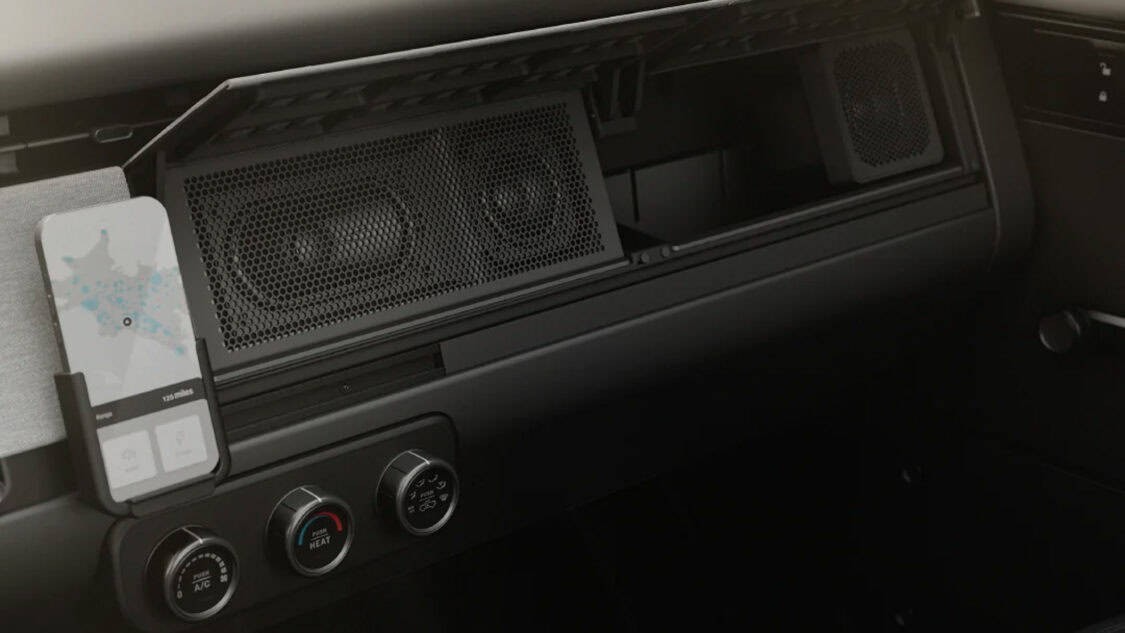
Where Slate truly shines is in how it empowers its customers. Over 100 modular accessories — including power windows, Bluetooth audio systems, cup holders, CarPlay touchscreens, and even a DIY SUV conversion kit — allow buyers to build their dream vehicle, piece by piece.
This “pay-for-what-you-actually-want” model feels refreshingly honest in today’s market, where even base models often come bloated with features consumers may never use.
A Lesson from the 2008 Tata Nano: Perception Matters!
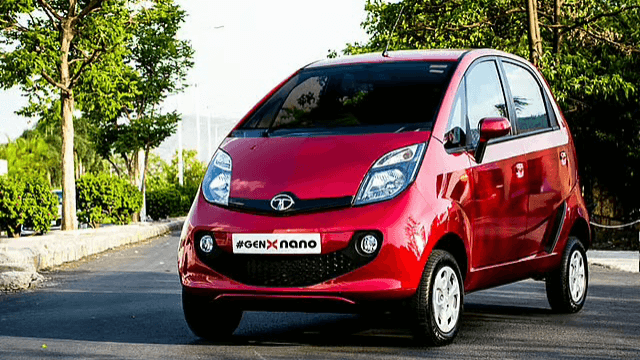
The Blank Slate’s mission reminds me of another bold automotive endeavor: the Tata Nano in India. Launched with the noble goal of providing affordable, reliable transportation to millions, the Nano debuted as the “world’s cheapest car,” priced around $2,000 in 2008 – roughly $3,000, adjusted for inflation.
On paper, it was a triumph:
- Ultra-affordable
- Compact for crowded cities
- Fuel-efficient and practical
- Backed by the trusted Tata brand
Yet despite the engineering brilliance and good intentions, the Nano ultimately struggled in the marketplace — and it wasn’t because of flaws in the product itself. The product was good for India’s needs at the time.
The real challenge was consumer perception.
Owning a Nano became unintentionally associated with lower status — a symbol of not being able to afford anything better. In markets where vehicles are seen as expressions of identity and aspiration, this stigma was difficult to overcome.
The takeaway? Even the most thoughtfully designed products can fail if consumers don’t feel proud to own them.
Affordability must be positioned as empowerment — not compromise.
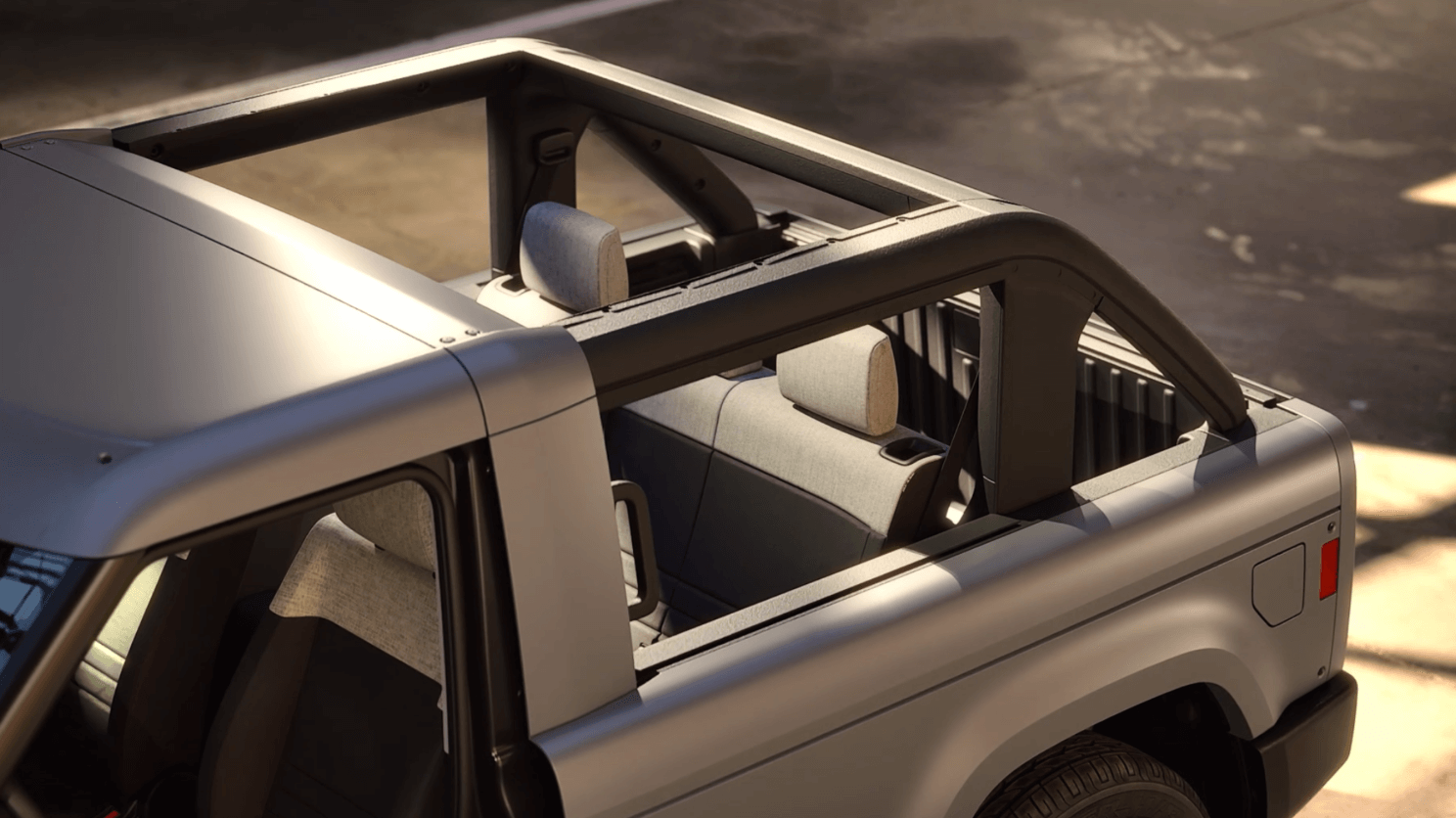
Slate will need to carefully position itself not as a “poor man’s Rivian,” but as a smart, rugged, and customizable lifestyle choice — a blank canvas for adventure seekers, tinkerers, and practical drivers alike.
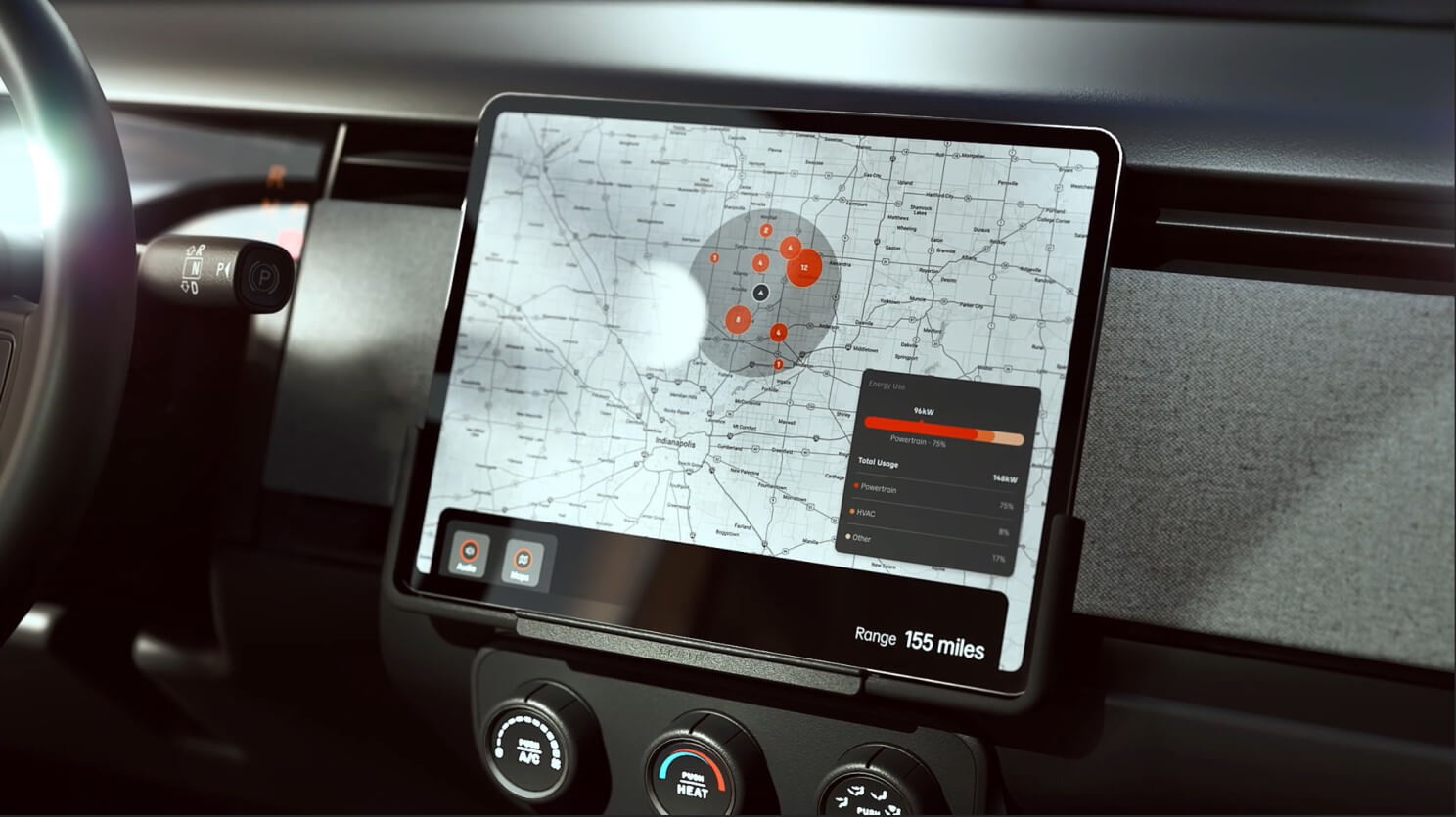
While the starting price is attention-grabbing, one must ask: How much will the fully personalized Slate cost?
Adding essentials — an upgraded battery, touchscreens, music system, even comfort basics — could push the final price north of $30,000.
At that point, buyers may begin comparing a Slate against more feature-rich offerings from Ford, Toyota, Hyundai, and even Rivian — brands that bring established reliability, advanced technology, and aspirational branding.
A Brave New Attempt at Democratizing EVs Deserves Appreciation
Yet despite these challenges, it’s hard not to admire Slate’s goal. They’re asking the right questions:
- What if EVs could be stripped of excess and put back into consumers’ hands — literally?
- What if owning an EV wasn’t just for the affluent, but truly for everyone?
At a time when electrification is no longer optional, but necessary, we need more companies willing to rethink old formulas. Slate Auto is doing just that.
Final Thought
As Slate Auto embarks on this exciting journey, it leaves us with an important question:
Will today’s EV buyers embrace a simpler, modular, and deeply personal driving experience — or will the allure of polished, tech-laden brands continue to dominate the market?
Only time (and the open road) will tell.
Would you embrace a customizable, minimalist EV like the Slate, or would you stick with the traditional brands you know? I’d love to hear your thoughts!