
Design Influence - Research, Prototyping & Vehicle Interface
Industry:
Automotive — Vehicle Interiors, Human-Machine Interface (HMI), UX Strategy.
Service Provided:
UX strategy & design leadership, Research (US & China), Prototyping (low-fi + high-fi), Interior HMI architecture, Cross-functional alignment with engineering & design, Specs for production, Concept development (“Magic Display”)
Industry:
Automotive — Vehicle Interiors, Human-Machine Interface (HMI), UX Strategy.
Service Provided:
The Challenge
The key challenge was ensuring that Lincoln delivered a distinctive luxury experience (Quiet Luxury) while sharing the same electrical architecture and operating system as its Ford counterpart.
This required pushing beyond traditional engineering and design practices, challenging entrenched ways of working, and introducing a new approach to in-vehicle HMI design that harmonized shared systems with differentiated user experiences.
Design Vision
- HMI design that reflects the Quiet Luxury Ethos.
- Balanced physical vs. digital controls.
- Luxury differentiation through HMI layout, UI/motion design and new brand-first features.
- Scalable system that delivers an excellent balance
between brand differentiation, cost and usability.
Cross-functional Challenges
Engineering pushed for +50% first-surface physical controls, posing a strong resistance to digital-first cockpit.
Design: The vision for simplified cockpit had much fewer physical elements that would have jeopardized usability and
feature discovery.
Compromise: With user-testing data and a proposal for intelligent pop-ups (contextual nudges) I aligned the
cross-functional teams on an approach wherein hot-keys remained physical and they launched an overlay in the
touchscreen for configurations/vehicle settings.
This approach not only achieved the balance, but also elevated usability:–
- Features and labels could now be translated
- Info. buttons could show an animation of how the feature works
- Helped us manage trip levels/blank buttons
Research (US and China)
Challenge: research cycles vs. program timing (tight release schedules)
Integration:
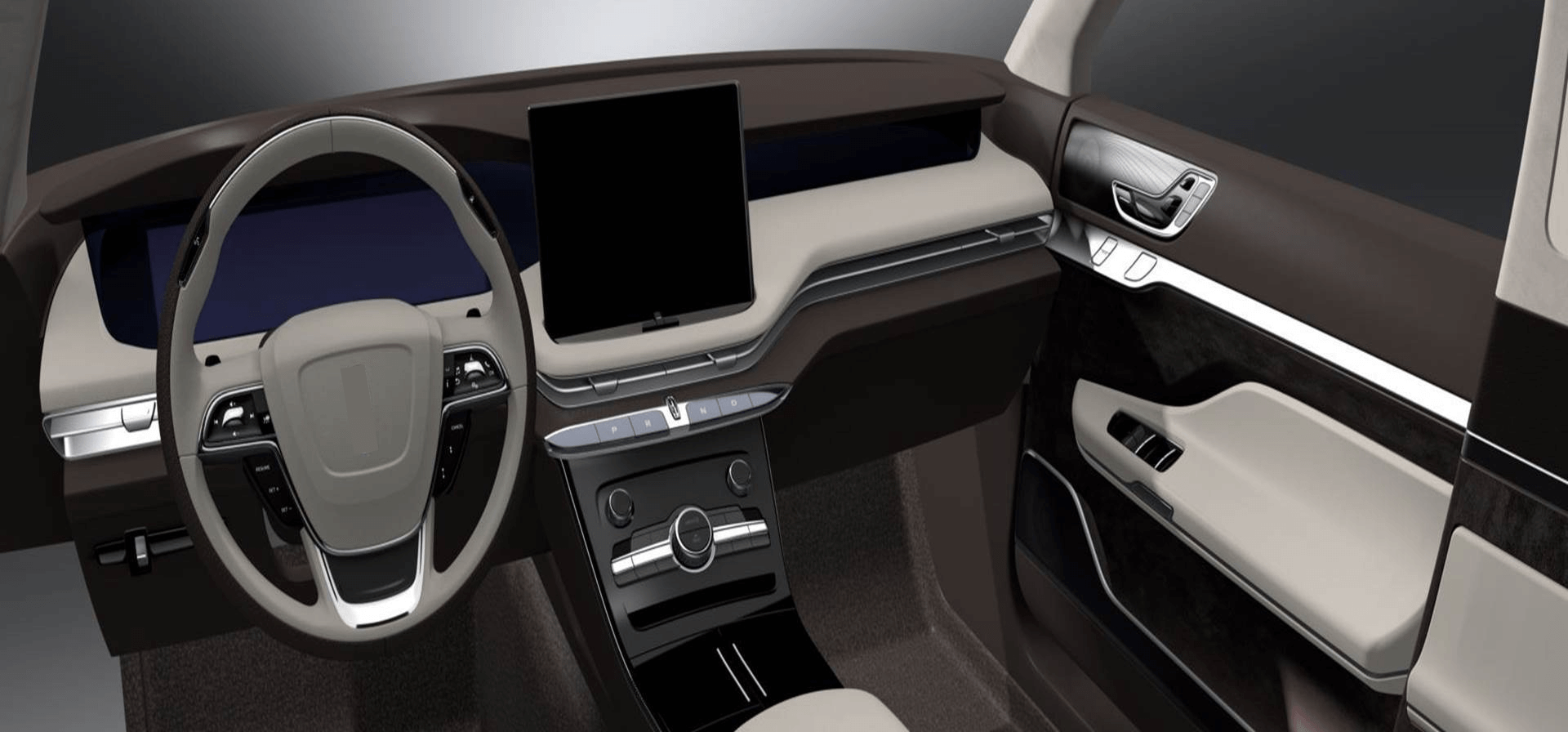
Translated research findings into actionable insights that design and engineering could respond to. We ran two rounds of iterations with the cockpit
prototypes: 1. Low-fi, 2. Hi-fi
Concept (BUC) build
Prototyping & Research Execution
- Full interior prototypes (digital + physical).
- High-fidelity wireframes, UI flows, and interactive prototypes.
- Managed bug fixes and iteration cycles with engineers.
- Delivered specs and prototypes that influenced production.
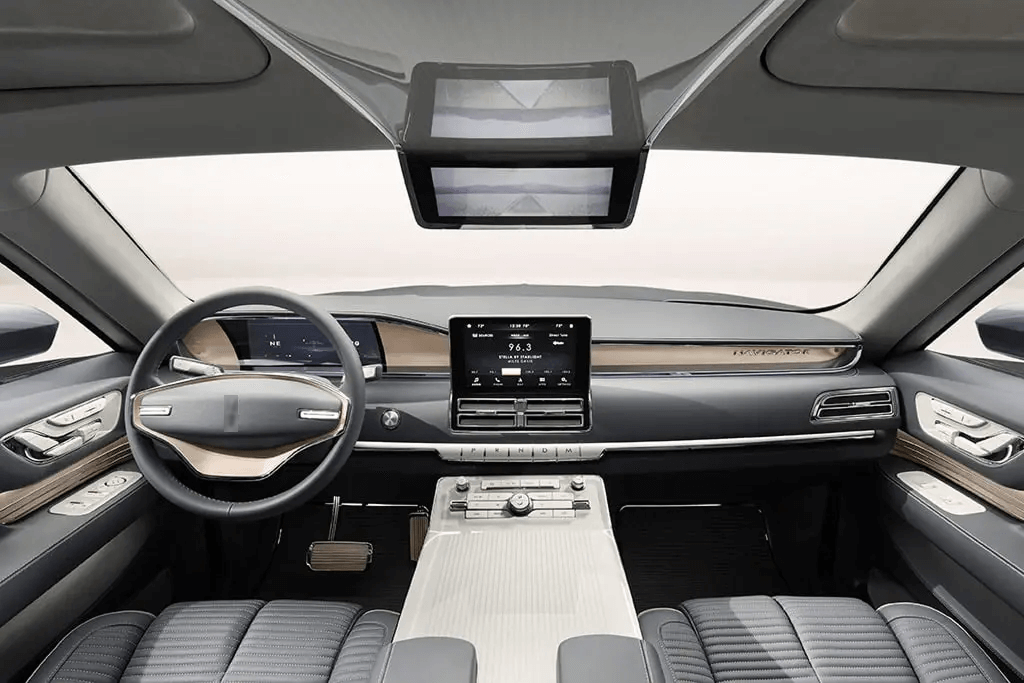
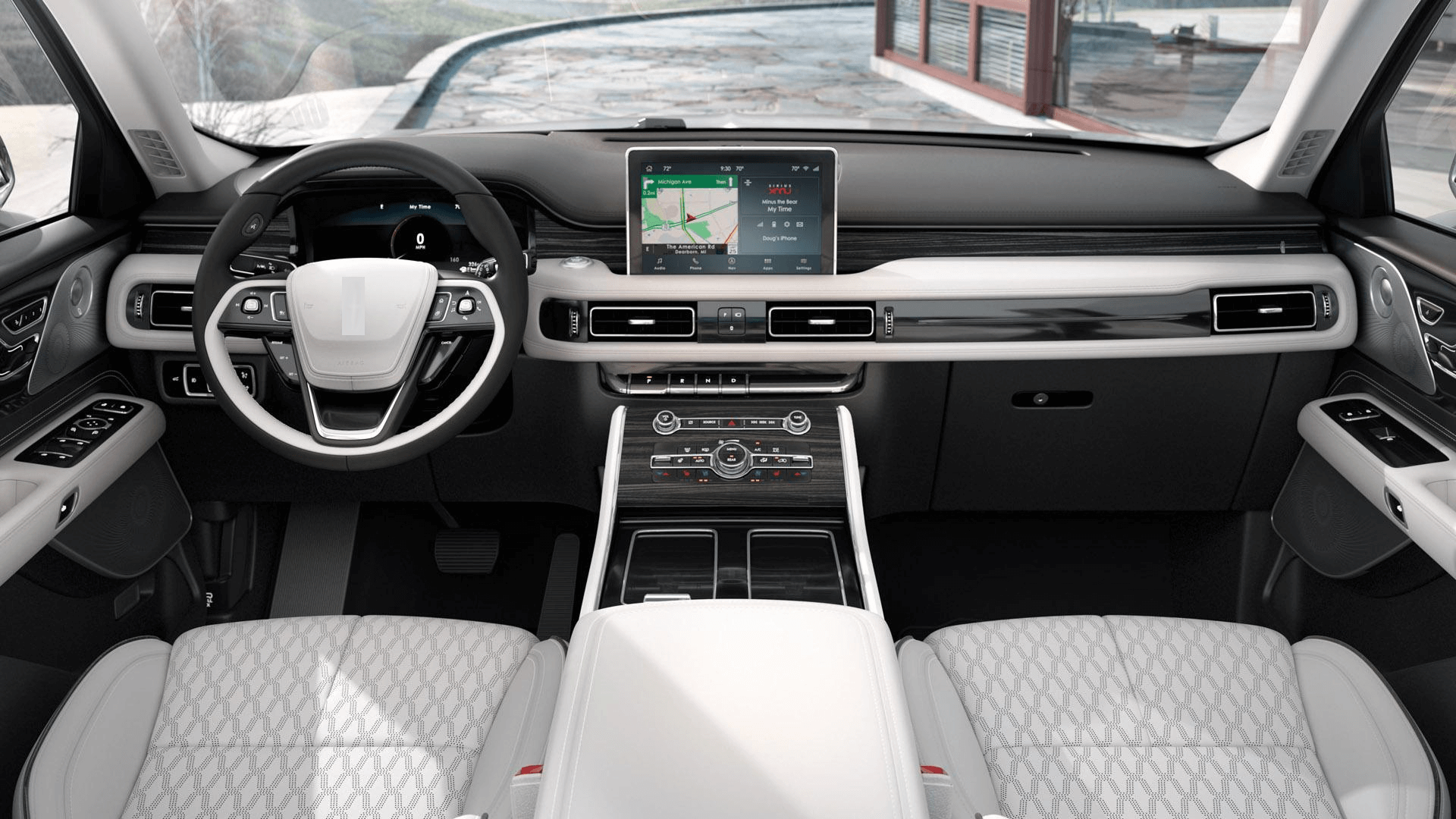
2016 Strategy
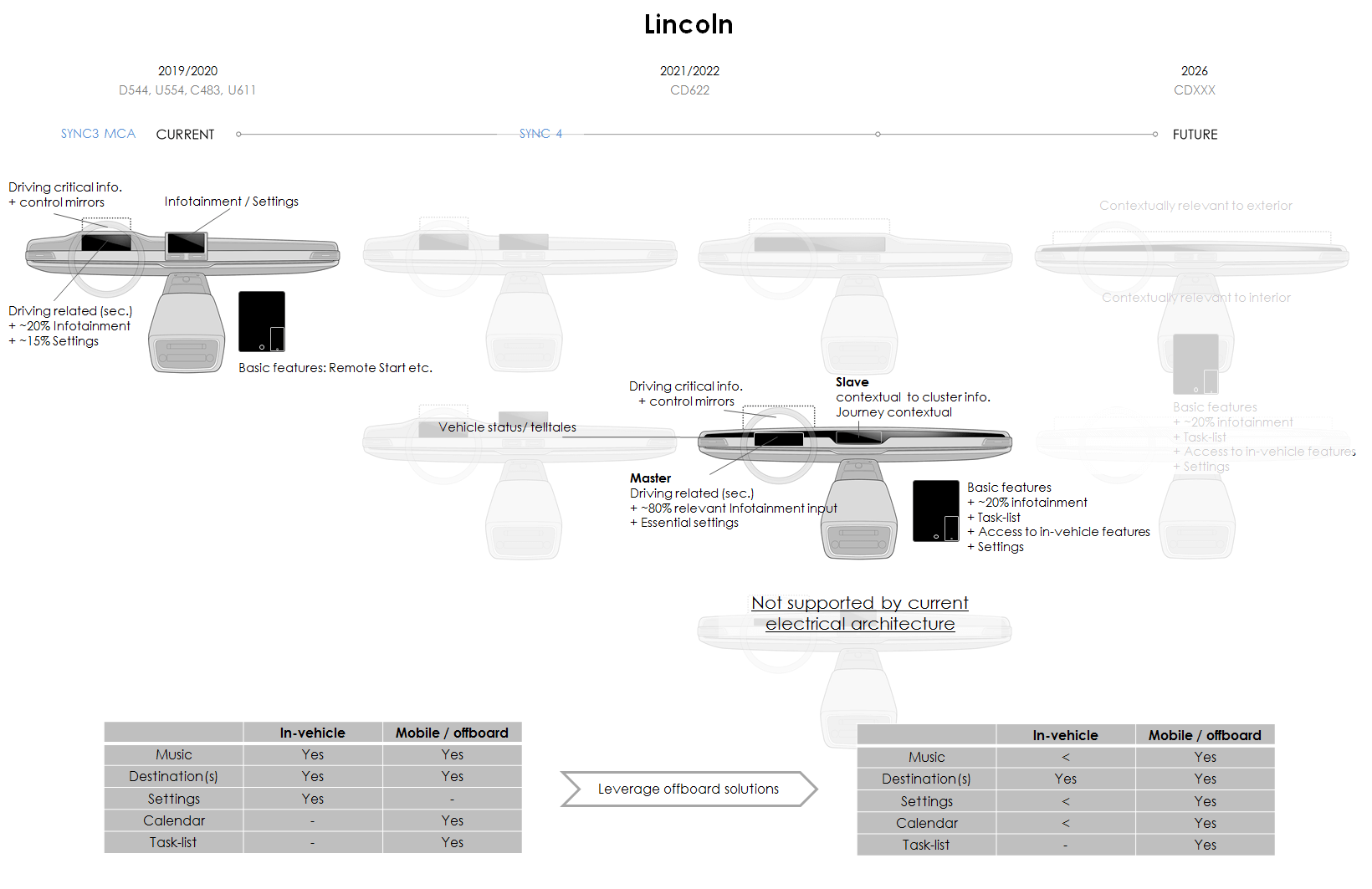
2023+ Strategy – “Magic Display”
Led the trade-off discussion with engineering and highlighted how a futuristic interior could be designed to be intuitive for our users. Developed a dual approach to this concept with distance-controller, as well as touch screen. Ran two rounds of interactions to refine the UX, while getting user feedback via user testing.
Outcome & Impact
Demonstrated my ability to influence cross-functional teams into aligning on a winning path forward.
Managed conflict resolution between engineering pragmatism and design ambition.
Global execution: Coordinated U.S. & China research + prototyping.
Innovation: Introduced contextual controls on steering wheel and considerate prompts.
The Lincoln HMI strategy reduced component complexity (cluster displays and touchscreens), while creating brand-differentiated luxury experiences that won multiple industry awards.
- Platform efficiency maintained (shared Ford OS + electrical architecture).
- Lincoln got unique premium cockpit experiences: motion, visuals, premium features.
- Improved customer perception → JD Power/UX scores up.
Balancing efficiency, scalability, and brand distinction across global product lines.
Let's Build Something Exceptional!
Plambo Solutions is a human-centered, value-driven product development partner committed to delivering maximum impact for our clients.