Whirlpool
Cross-brand UI Strategy
Led Whirlpool's cross-brand digital strategy, transitioning from siloed, brand-specific innovation to an omni-branded approach through software/UI differentiation.
Industry
Consumer Appliances / Home Appliances
Timeline
2021 – Present
Services
Digital Graphics & Motion · Industrial Design · CMF · Haptics · Sonics
01 / Introduction
Overview
As Global Director of User Experience, I led Whirlpool's cross-brand digital strategy, driving efficiency by transitioning from siloed, brand-specific innovation to an omni-branded approach. This involved simplifying the tech stack, commonizing hardware, and using software/UI differentiation supported by sound, motion, CMF, and industrial design to preserve each brand's unique identity while saving significant cost.
02 / The Friction
Aligning three brand heads while standardizing UX
“Three brands, seven hardware variants, zero shared architecture.”
The main challenge was aligning with three brand heads (Whirlpool, KitchenAid, JennAir) to ensure that while UX was being standardized across platforms, the appropriate experience for each brand was still maintained. This required influencing senior leaders across multiple functions and shifting mindsets toward hardware simplification without compromising brand differentiation.

03 / Strategy
Driving Profitability Through Simplicity
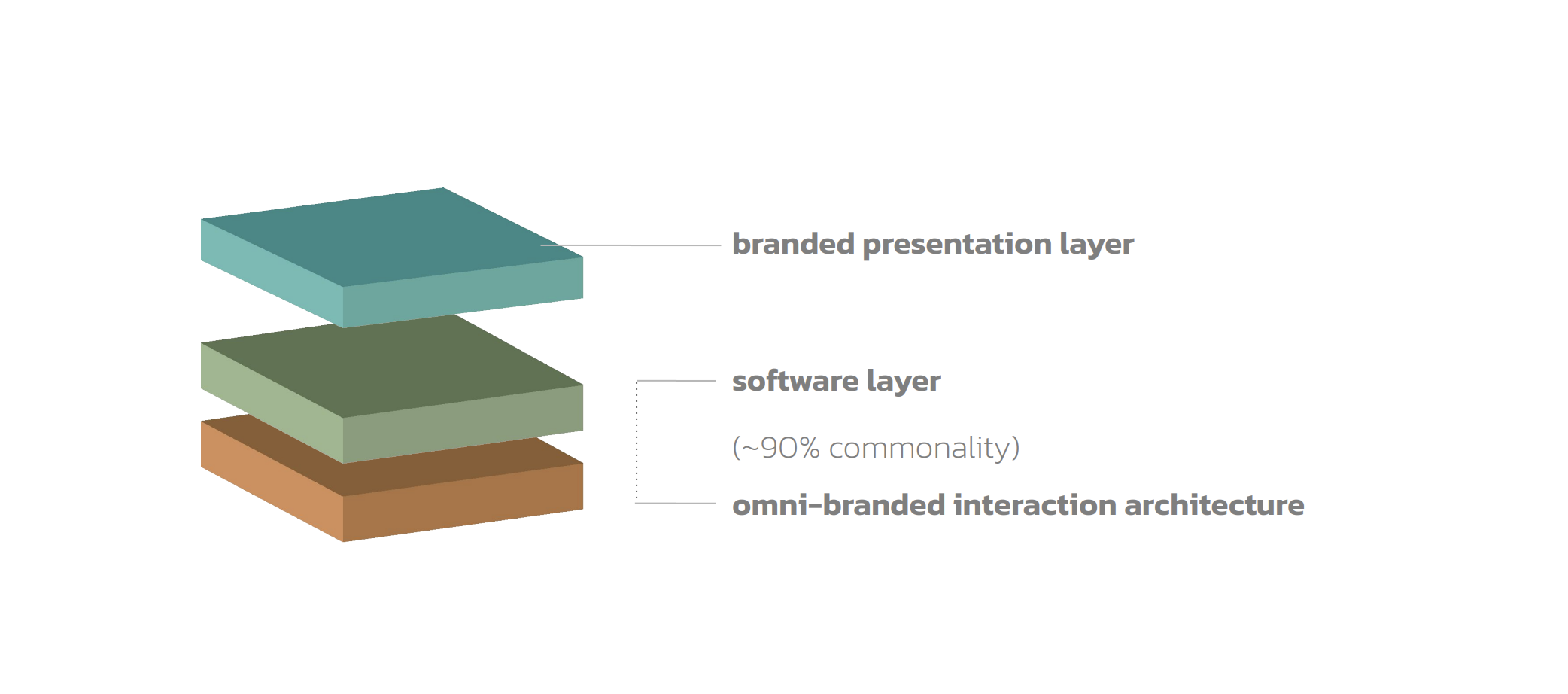
We developed an omni-branded interaction architecture with ~90% software commonality across all brands, topped by a branded presentation layer that preserved each brand's unique identity. This three-layer system omni-branded interaction architecture at the base, shared software layer in the middle, and branded presentation layer on top enabled massive hardware consolidation while maintaining distinct brand experiences.
Omni-branded Interaction Architecture Established a shared foundation of interaction patterns, navigation flows, and user journeys common across Whirlpool, KitchenAid, and JennAir
Software Layer (~90% Commonality) Unified the underlying software stack to achieve roughly 90% code reuse, reducing engineering effort and accelerating feature delivery
Branded Presentation Layer Created distinct visual skins using brand-specific typography, color, imagery, motion, haptics, and sonics to differentiate each brand experience
04 / Execution
One architecture, three distinct brand experiences
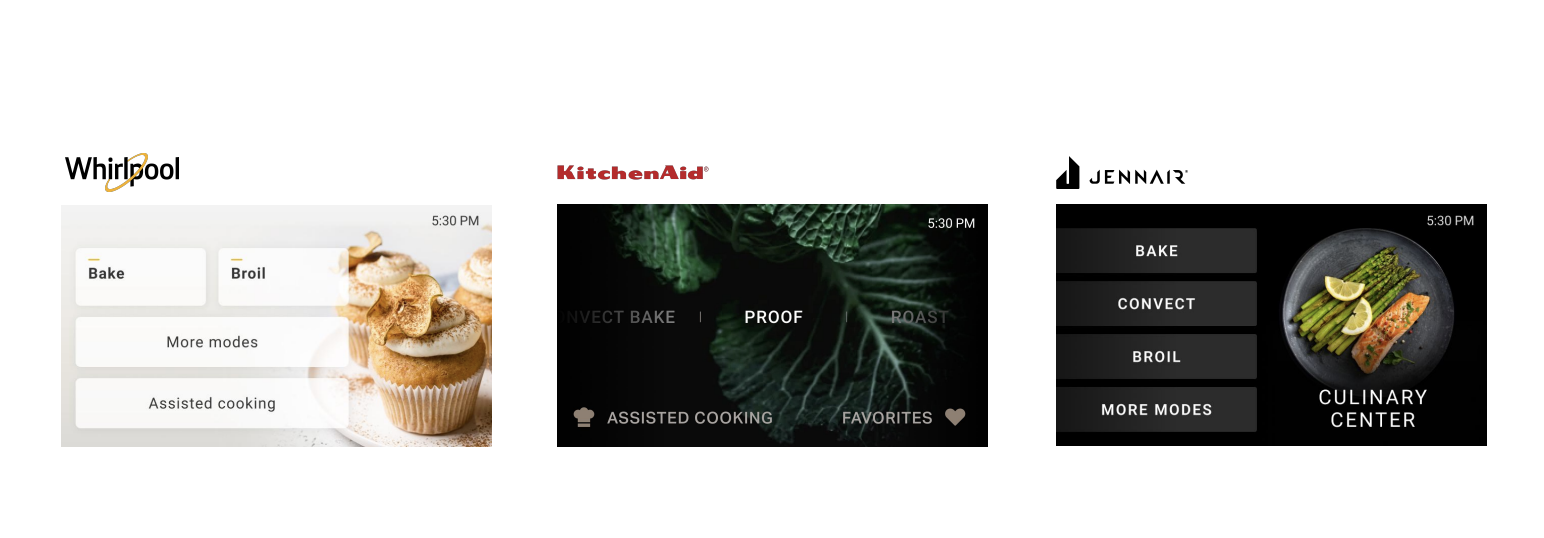
Brand differentiation used five disciplines: Industrial Design, CMF, Digital Graphics & Motion, Haptics, and Sonics, focusing on Digital Graphics & Motion. The 4.5-inch indigo 2 wall oven's home screen shows one wireframe creating three distinct brands: Whirlpool with warm tones and food images; KitchenAid with bold typography and herbs; JennAir with a dark, premium look and plated dishes.
Adaptive layout framework that morphs layout states and spacing automatically according to screen physical restrictions.
Tailored visual themes where the same layout structural components load custom color, font, and animation tokens.
Drastically reduced firmware logic complexity and deployment cycle.
“The cross-brand architecture proved that standardization and brand differentiation are not opposing forces they are complementary when the system is designed with both in mind.”
07 / Design System
Cross-brand Architecture Scalable Components
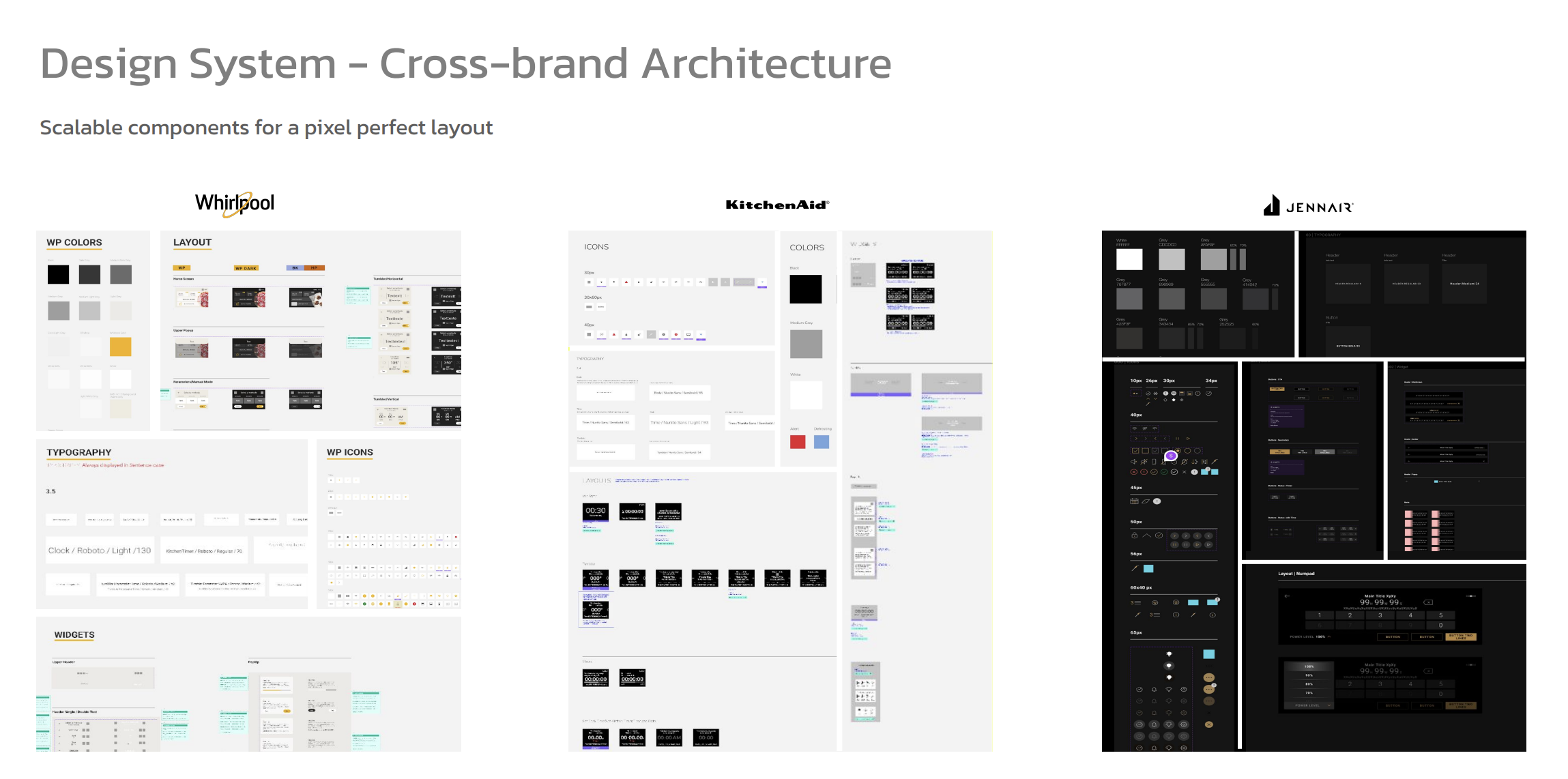
Created comprehensive design systems for each brand with scalable components ensuring pixel-perfect layouts. Each brand's system included tailored color palettes, typography scales, iconography, layout grids, and widget libraries — all built on the shared architectural foundation. Whirlpool featured warm neutrals with gold accents; KitchenAid used bold reds with refined icons; JennAir employed a sophisticated dark theme with premium detailing.
05 / Synergy
Collaboration
Partnered directly with global design leadership, interior architecture teams, and brand experience leads to align the cross-brand digital vision across diverse hardware, product segments, and software groups.
06 / Validation
Outcome
The shift enabled faster design refresh cycles, easier software-based brand differentiation, and a stronger alignment of UX strategy across engineering, design, and marketing.
Key Project Impacts
$10M: Cost Savings — Driven by lower manufacturing complexity, streamlined procurement, and economies of scale from reducing touchscreen SKUs
40%: SKU Reduction — Reduced reliance on seven different display hardware variants down to just three across all brands
200K: Annual Wall Ovens — Units sold annually now benefit from the unified cross-brand design system